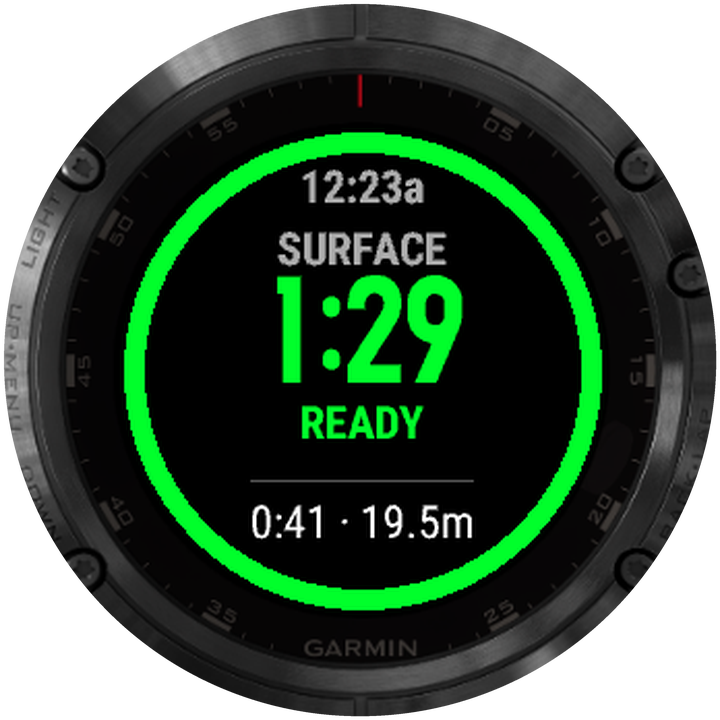
READY alerts
A red ring fills as you recover, flips green and buzzes the moment you’re clear to dive. No maths, no guessing. Glance and go.
Freediving & spearfishing
inDepth Apnea Blue is a freediving app for Garmin watches. It gives the watch you already own live depth, heart rate, hang detection and a dive log on the wrist. And the thing nothing else gives you: five surface-rest safety models that buzz when your surface interval is done and you’re clear to dive again. Built for freediving and spearfishing.
Nothing else does this
We looked hard. The Descent Mk3 is a fine dive computer, but it doesn’t run the recovery models freedivers train under, and it won’t show you a mid-dive profile or find a hang for you. This one does.
2× / 3× dive time, Adaptive (AIDA), Taravana nitrogen-load, and the Molchanovs system: the recovery models freedivers train under, computed live on your wrist.
No other watch we’ve found runs these.
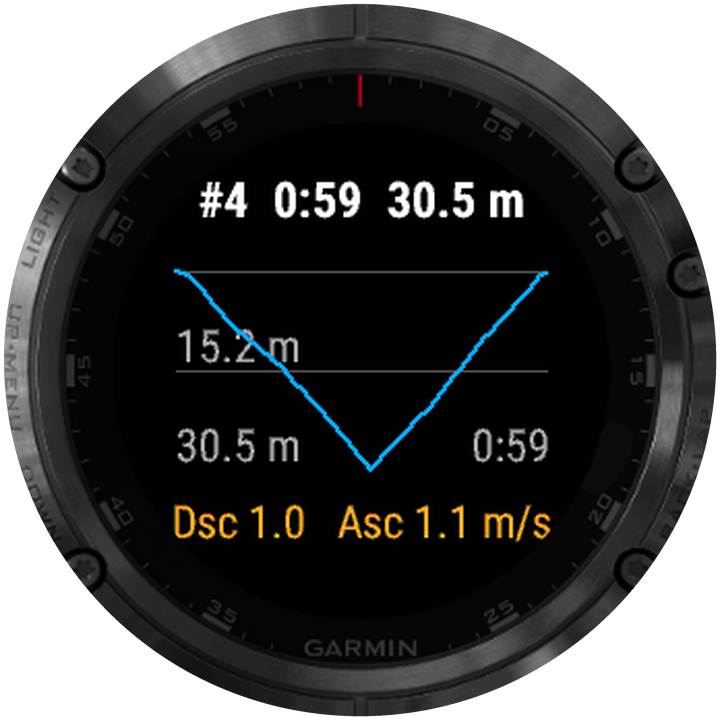
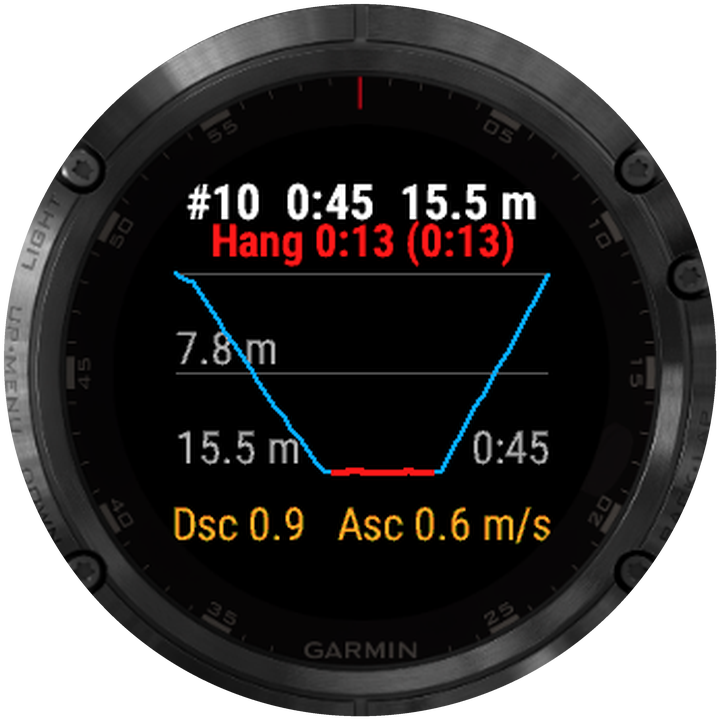
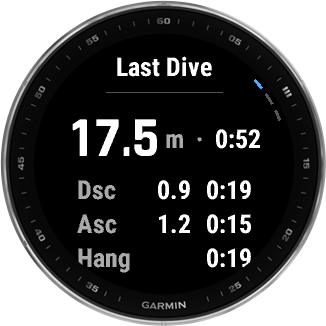
02Pull up any dive’s depth graph, ascent and descent rates and stats between dives, without ending the session or touching your phone.
No other watch we’ve found does this.
03Finds your bottom hang on its own, total and longest hold, and marks the stretch in red on the profile.
We’ve yet to see this on another freediving watch.
Priority Safety & recovery
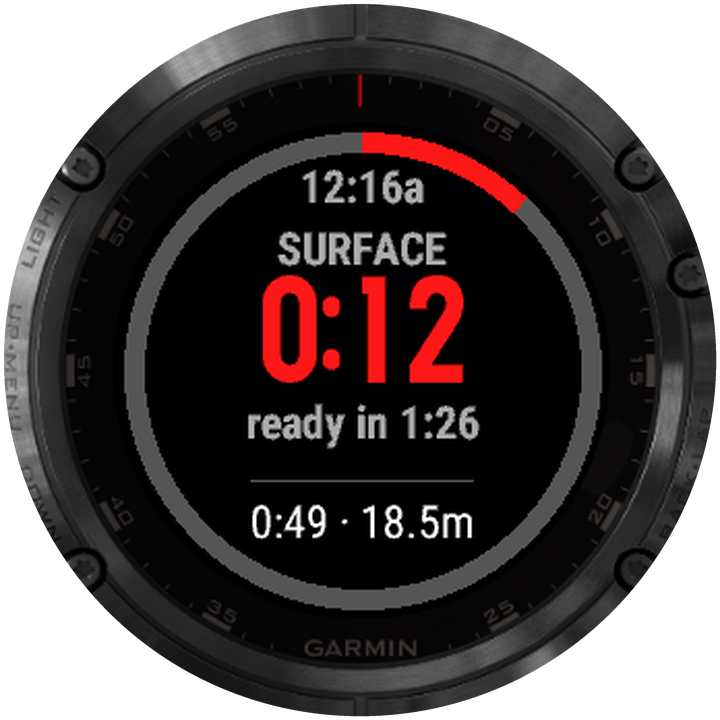
Going down again too soon is where a session gets dangerous. Short surface intervals stack up into blackout risk, and even the most expensive freediving watch hands you a count-up timer and wishes you luck. inDepth Blue runs the recovery models freedivers train under (AIDA, Taravana, Molchanovs, 2× / 3× dive time) on the watch itself, and buzzes when your surface interval is done and you’re clear. Your rest stops being a guess.
A red ring fills as you recover, flips green and buzzes the moment you’re clear to dive. No maths, no guessing. Glance and go.
2× / 3× dive time, Adaptive (AIDA), Taravana nitrogen-load, and the Molchanovs system. Pick how conservative you want to dive today.
Cut your rest short and the phone flags that dive in red. A record of the risks you took, easy to learn from and hard to argue with.
A training aid, not a life-support device. inDepth Blue never blocks a dive. It tells you what it knows and leaves the call to you. Never dive alone. One up, one down.
New Spots & navigation
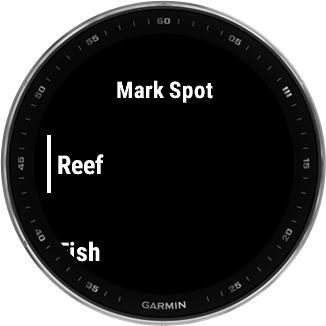
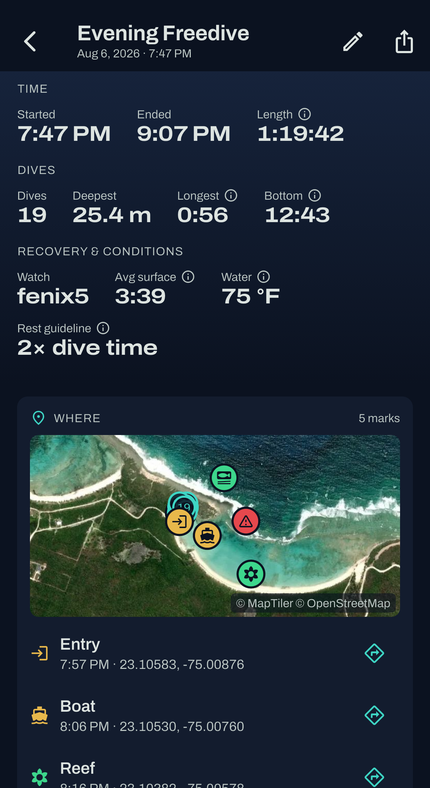
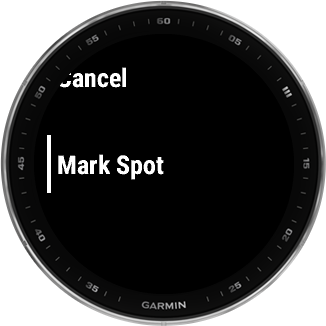
You surface next to something worth remembering: a reef, a wreck, a hazard, the spot the fish were holding. One press marks where you’re floating, with a label. It lands on a satellite map in the phone app and in your watch’s own saved locations, so you can come back next season by boat, or swim back to it on the surface with nothing but the watch.
Off by default: Settings → GPS → Store Location and Mark Spots. With it on, the watch runs GPS for the whole session, which costs battery. GPS doesn’t reach through water, so every position is taken at the surface: mark a spot floating above it, not on the way up. Not available on Fēnix 5 / 5S.
Priority A dive computer on your wrist
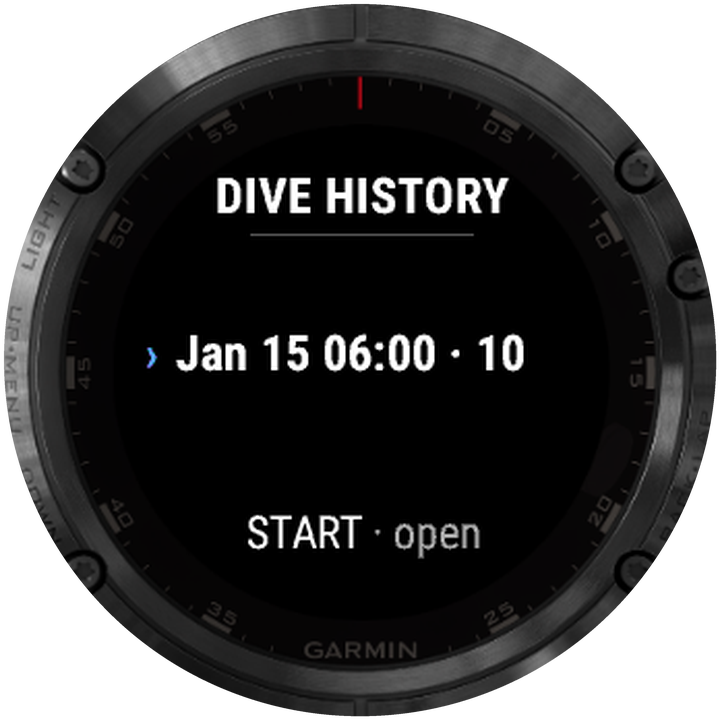
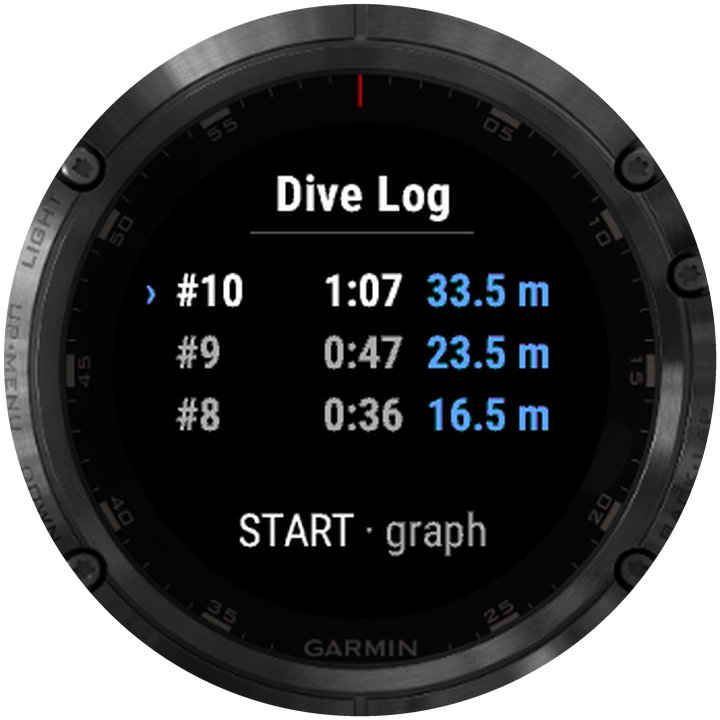
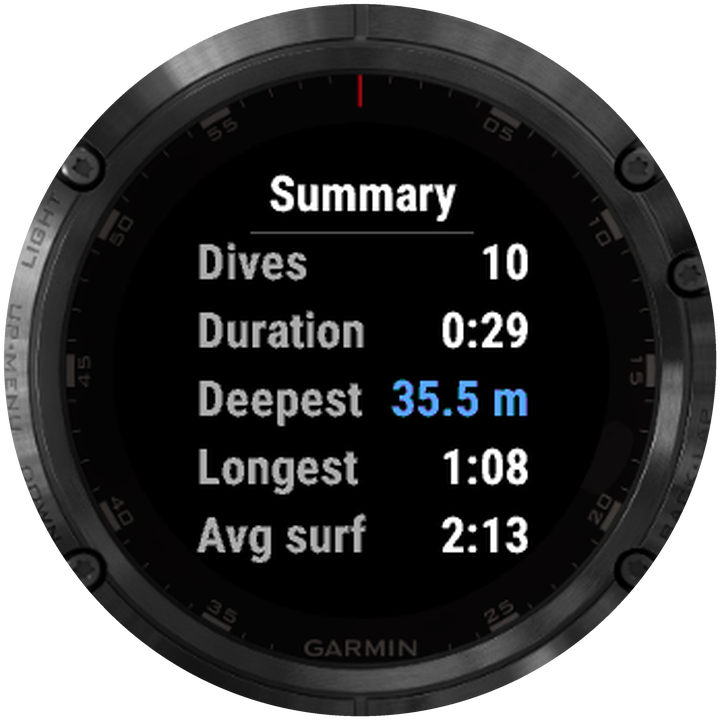
In the water, the watch works as a full freediving instrument. Surface, and Last Dive Summary can open on its own with max depth, time, rates and hang, then fade after 30, 60, 90 or 120 seconds. Summary, Surface and Log still sit one button apart, and you can open any dive’s depth graph, rates and stats during the session. You don’t end it and you don’t reach for your phone.
On your phone Deep analysis
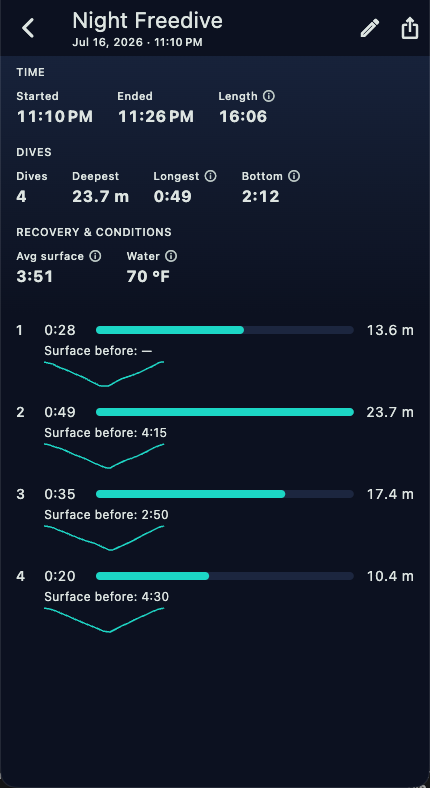
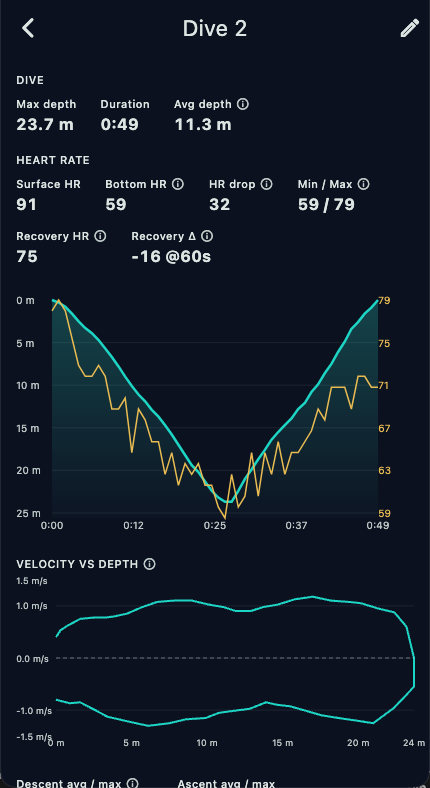
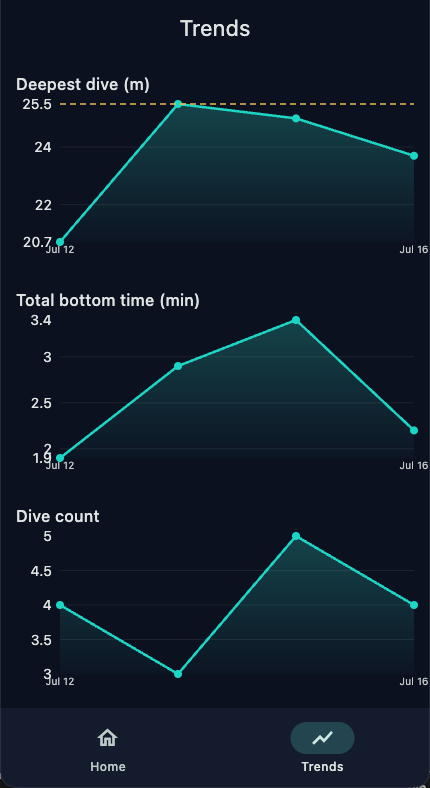
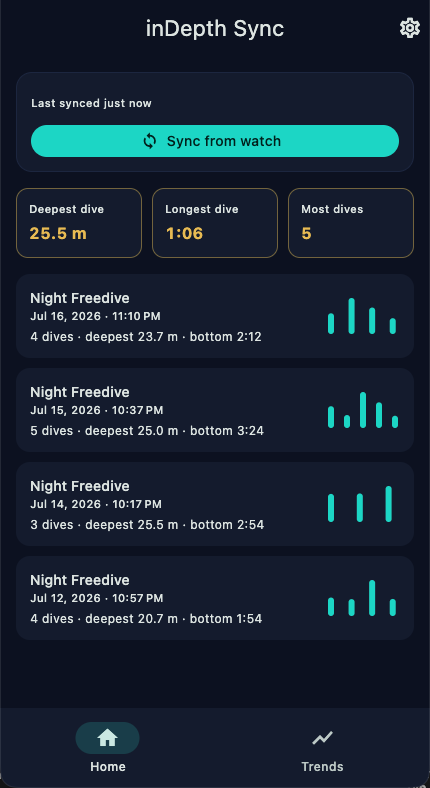
inDepth Sync pulls sessions off the watch over Bluetooth, on a transfer that keeps working even on a busy link, and turns each dive into a full workup: depth graphs, velocity plots, heart-rate recovery, trends across sessions. All the things a 1-inch screen can’t draw, on your phone.
Built by a freediver, for freedivers
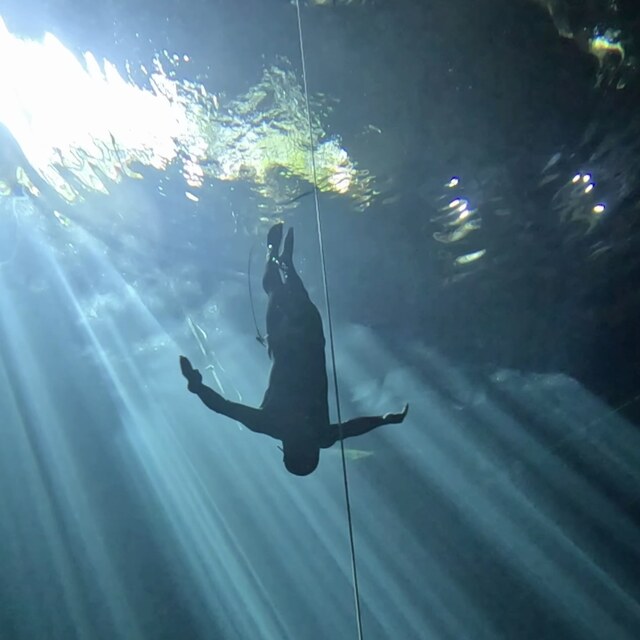
I built inDepth Blue because I got tired of the missing features and needless limits on my Fenix and Descent. I wanted a clear idea of when it was safe to dive again. I wanted better alarms, hang detection and better history on the watch. Every feature is in here because the watch on my wrist didn't have it.
It's still built that way: I test releases on my own dives, and the device table changes when divers report what their watches do in the water.
— Mariusz, founder & freediver
Supported hardware
No new gear to buy. inDepth runs on nineteen Garmin models today: the Fēnix 5, 5 Plus, 7 and 8 families plus the Descent Mk2, Mk3 and G2, with more on the way. How deep it reads depends on the watch: the Fēnix 5, 5 Plus and 8 families read true depth (field-verified to 30 m and uncapped), while Garmin's firmware limits what third-party apps can read on the Fēnix 7 and on the Descent Mk2 and Mk3. Nobody has tested a Descent G2, so it carries no figure at all and the app plays it safe. Each row below says which it is.
| Watch | inDepth Blue | inDepth Pool |
|---|---|---|
| Fēnix 5 | ✓True depth | — |
| Fēnix 5S | ✓True depth | — |
| Fēnix 5X | ✓True depth | — |
| Fēnix 5 Plus | ✓True depth | ✓ |
| Fēnix 5S Plus | ✓True depth | ✓ |
| Fēnix 5X Plus | ✓True depth | ✓ |
| Fēnix 7 | ✓Depth to ~3m | ✓ |
| Fēnix 7S | ✓Depth to ~3m | ✓ |
| Fēnix 7X | ✓Depth to ~3m | ✓ |
| Fēnix 8 43mm | ✓True depth | ✓ |
| Fēnix 8 47mm | ✓True depth | ✓ |
| Fēnix 8 Pro 47mm | ✓True depth | ✓ |
| Fēnix 8 Solar 47mm | ✓True depth | ✓ |
| Fēnix 8 Solar 51mm | ✓True depth | ✓ |
| Descent Mk2 / Mk2i | ✓Depth to ~3m | ✓ |
| Descent Mk2 S | ✓Depth to ~3m | ✓ |
| Descent Mk3 43mm | ✓Depth to ~3m | ✓ |
| Descent Mk3i 51mm | ✓Depth to ~3m | ✓ |
| Descent G2 | ✓Depth unverified | ✓ |
True depth = uncapped depth reading on Fēnix 5, 5 Plus and 8 (field-verified to 30 m).Depth to ~3m = firmware-limited on Fēnix 7, Descent Mk2 and Mk3.Depth unverified = the Descent G2, which nobody has tested yet.
~40 m is the practical limit on Fēnix, whose cases are rated 10 ATM. On the seven ~3 m rows (the Fēnix 7 family, the Descent Mk2 and the Descent Mk3) inDepth Blue offers only the surface-rest models that don't need depth (2× / 3× Dive Time and Manual, default 2×): Adaptive (AIDA), Taravana and Molchanovs need a depth they can trust, and fed a ~3 m reading all three already came out at plain 2×, so the label now matches the arithmetic. Rests don't get shorter. Those seven rows don't all rest on the same evidence: the Descent Mk3 is measured, the Fēnix 7 is inferred, and the Descent Mk2 is reported clamped at ~3 m by a diver, not instrumented. The Descent G2 is the eighth row without a true-depth badge and it carries no figure at all — nobody has tested one. It's a Descent, so we expect the same cap and the app treats it that way, which hides the same three rest models there. Molchanovs' 60 m / 24-hour rule isn't enforced on any watch; that one stays yours to keep. How we know each number. More Garmin watches are planned: tell us which one you use and we'll let you know if it's added.
How it works
Plug your Garmin in, click once, and the installer puts inDepth Blue on your watch. Done in seconds.
Dives detect themselves. Live depth, the safety models, alarms, hang detection and your history all run right on the wrist.
Back on dry land, open inDepth Sync to pull sessions over Bluetooth and dig into the data: graphs and trends no watch can draw.
Training lengths instead of metres down? inDepth Pool turns the same watch into a dynamic apnea trainer: automatic turns and laps, heart-rate charts on the wrist, and workouts that travel with you.
Free
inDepth Blue is free. Download the desktop installer to get the watch app, installer and phone app together.